Written and reviewed by the leadership team at Pathfinder Recovery, including licensed medical and clinical professionals with over 30 years of experience in addiction and mental health care.
Foundation: Understanding the Types of Outpatient Rehab
Navigating the various types of outpatient rehab can feel overwhelming, but the core concept is simple: professional addiction treatment that allows you to live at home. Unlike residential programs that require a 24/7 stay, outpatient care integrates recovery into your daily life. This structure enables you to continue working, attending school, or caring for family while receiving evidence-based treatment.
Figure 1: The Outpatient Balance
Treatment + Daily Life = Sustainable Recovery
Outpatient care acts as a bridge, connecting clinical therapy with real-world application. You learn coping skills in a session and apply them immediately in your home environment.
The intensity of care is not "one size fits all." It scales based on your medical necessity and recovery stage. Some individuals start with high-intensity schedules and step down over time, while others may only need weekly check-ins. Treatment typically combines individual counseling, group therapy, and education on the underlying factors of dependency. Crucially, effective programs also address co-occurring mental health conditions—such as anxiety or depression—that often accompany substance use disorders.
Tool: Readiness Assessment Checklist
What you'll learn: How to determine if outpatient care is safe and appropriate for your current situation.
Before choosing a program, review this checklist. If you answer "Yes" to most questions, outpatient rehab is likely a strong fit. 1
Housing Stability: Do you have a safe, substance-free place to live?
Medical Stability: Are you free from severe withdrawal symptoms that require 24-hour medical monitoring?
Support System: Do you have friends or family who support your recovery goals?
Daily Functioning: Can you manage basic daily tasks (hygiene, food, transportation) independently?
Research indicates that outpatient care is as effective as inpatient programs when the individual is matched to the correct intensity level.
ASAM Levels: Matching Intensity to Need
The American Society of Addiction Medicine (ASAM) provides the industry standard for matching patients to the right level of care. Think of these levels as "dials" that adjust the volume of support you receive.
Level 1 (Standard Outpatient): Less than 9 hours of treatment per week. Best for maintenance and stability.
Level 2.1 (Intensive Outpatient - IOP): 9 to 20 hours per week. A balance of structure and independence.
Level 2.5 (Partial Hospitalization - PHP): 20+ hours per week. High structure for those needing daily monitoring without an overnight stay.
Practice This: Look at your calendar. Can you dedicate 3 hours a day, 3 days a week (IOP)? Or do you need full-day support (PHP)? Being realistic about your time availability is the first step in choosing a sustainable program.
Intermediate Practice: Core Types of Outpatient Rehab
Once you understand the foundation, it is time to look at the specific program structures. The following table breaks down the differences between the three primary types of outpatient rehab to help you compare them side-by-side.
Program Type
Time Commitment
Best Suited For
Key Features
Standard Outpatient
1–3 sessions/week (< 9 hours)
Individuals with long-term stability or stepping down from IOP.
Focus on maintenance, coping skills, and reintegration.
Intensive Outpatient (IOP)
3–5 days/week (9–19 hours)
Those needing structure but working/schooling full-time.
Group therapy, family sessions, and regular drug testing.
Partial Hospitalization (PHP)
5 days/week (20–30 hours)
Individuals transitioning from detox or inpatient care.
Daily medical monitoring, intensive therapy, skill-building.
Deep Dive: IOP vs. PHP
Intensive Outpatient Programs (IOPs) are the "middle ground" of recovery. They typically run for 9-12 hours a week. This format is ideal if you are stepping down from residential treatment but still need accountability. It allows you to maintain your job or education while receiving significant clinical support.3
Partial Hospitalization Programs (PHPs) are the most intensive option. Often called "day treatment," PHP treats addiction with the same clinical rigor as inpatient care but allows you to sleep at home. This is often the recommended starting point for someone with a moderate-to-severe substance use disorder who has a stable home environment but needs daily medical and therapeutic intervention.
Virtual Models: Recovery from Home
Virtual outpatient care removes barriers like transportation and geography. Using secure telehealth platforms, you can access therapy, group support, and medical appointments from home. This is particularly valuable for residents in Vermont, Massachusetts, Connecticut, and New Hampshire, where winter weather or rural distances can make travel difficult.
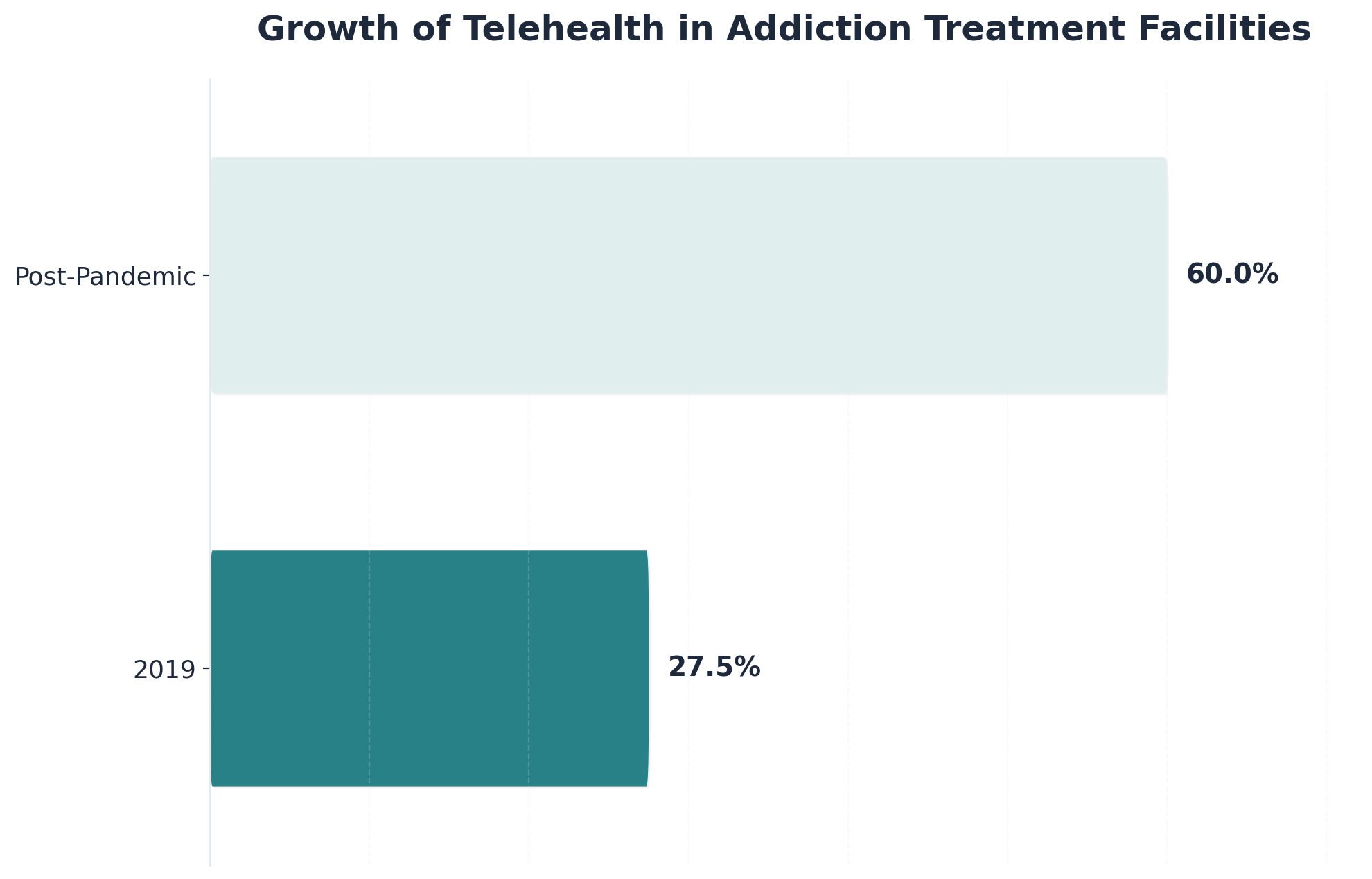
Growth of Telehealth in Addiction Treatment Facilities (A bar chart comparing the percentage of addiction treatment facilities offering telehealth services in 2019 versus the current figure (post-COVID-19 pandemic) would effectively illustrate this dramatic growth.)
"Over 60% of treatment facilities now offer telehealth services, and industry standards require strict data protection and privacy safeguards."6
Practice This: Test your tech. Ensure you have a private room, a stable internet connection, and headphones. If you can stream a video, you have the bandwidth for virtual recovery.
Advanced Applications: Specialized Types of Outpatient Rehab
Standardized approaches often miss critical factors that influence recovery. Specialized care pathways address unique clinical situations, ensuring that treatment is relevant to your specific life experience and medical needs.
Dual Diagnosis and Trauma-Informed Care
Dual Diagnosis treatment integrates support for addiction with care for co-occurring psychiatric conditions like depression, anxiety, or PTSD. It is critical to treat both simultaneously; treating one without the other often leads to relapse.
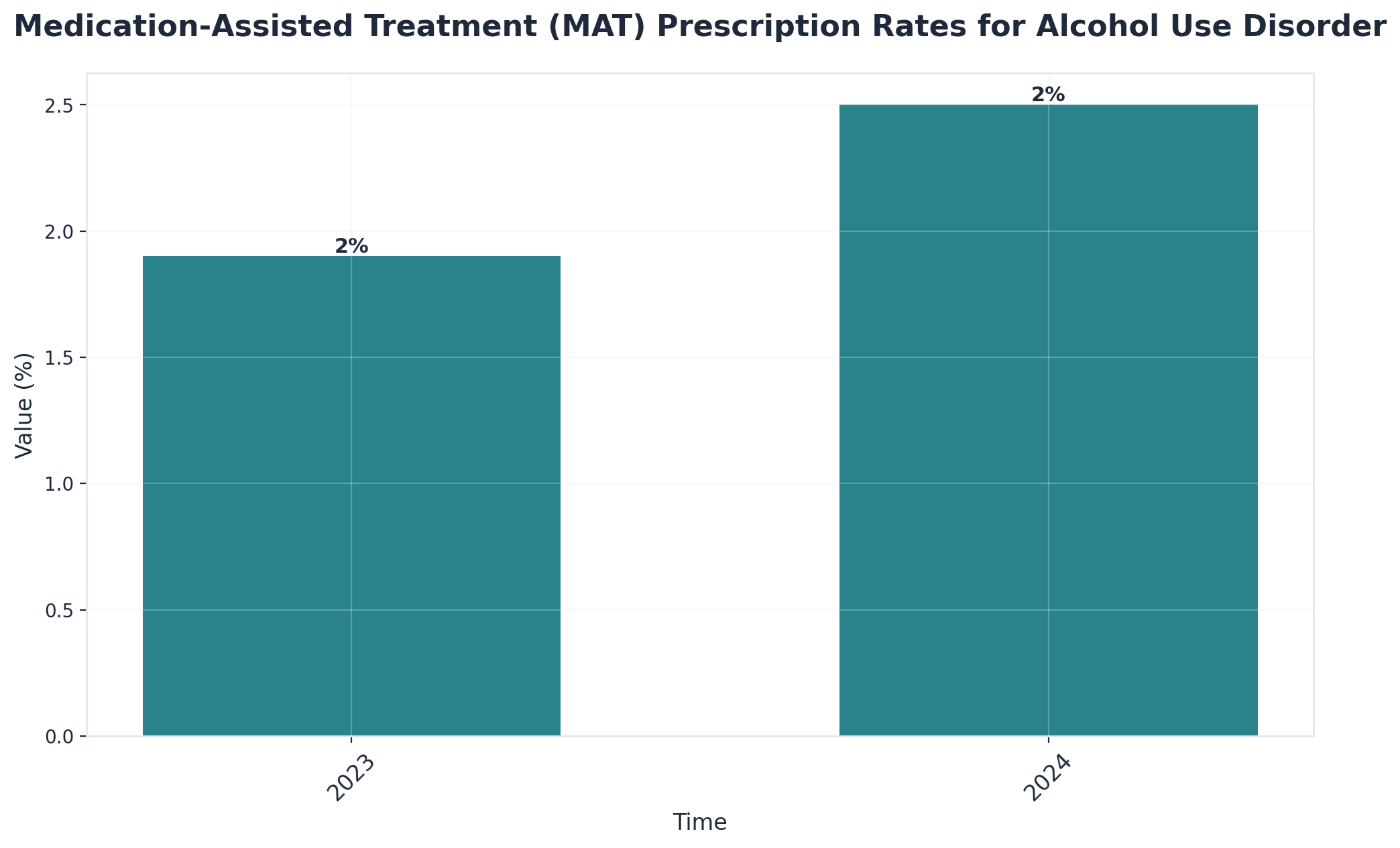
Medication-Assisted Treatment (MAT) Prescription Rates for Alcohol Use Disorder (Source: Behavioral Health in 2026 Will Transition From Growth to Proof)
Studies indicate that integrated dual diagnosis programs reduce hospitalization rates by 40% compared to treating conditions separately.
Trauma-Informed Care recognizes that past trauma often drives substance use. These programs create a safe environment where you can process experiences without being re-traumatized. For those in New England, finding a provider who offers co-occurring support alongside SUD treatment is essential for holistic healing.10
Recovery, Made Possible — From Home
Pathfinder Recovery offers in-home addiction and mental health treatment that fits your life — not the other way around.From at-home detox and MAT to virtual IOP and peer support, our licensed clinicians bring evidence-based care to you through secure telehealth.
MAT combines FDA-approved medications (like buprenorphine or naltrexone) with counseling. It is the gold standard for treating opioid and alcohol use disorders.
Sample MAT Protocol:
Phase
Timeline
Key Components
Induction
Days 1–3
Medical assessment via telehealth
Initial medication dosing
Monitoring for withdrawal symptoms
Stabilization
Weeks 1–4
Weekly medical check-ins
Medication dosage adjustments
Integration with IOP/PHP therapy sessions
Maintenance
Ongoing
Monthly medical visits
Continued behavioral therapy
Practice This: If you are struggling with opioid or alcohol dependence, ask a provider specifically about their MAT capabilities. It is a medical tool that stabilizes brain chemistry, allowing therapy to take root.5
Frequently Asked Questions
Can I continue working full-time while attending outpatient treatment?
Yes, many individuals continue working full-time. This flexibility is a core strength of outpatient rehab. Programs, including standard and intensive tracks, are structured around work obligations, often offering sessions in the early morning, evening, or virtually. Employers can also support this by providing flexible scheduling for telehealth sessions.6
How does virtual outpatient care protect my privacy and confidentiality?
Virtual outpatient care uses secure, HIPAA-compliant platforms where health information is encrypted. No sessions are recorded without written consent. You can further protect your privacy by using headphones and choosing a quiet, private room for your sessions.
What happens if I relapse during outpatient treatment?
Relapse is viewed as a clinical setback, not a failure. If it occurs, contact your provider immediately. They will adjust your treatment plan—perhaps increasing session frequency or moving you to a higher level of care like PHP—to help you regain stability without judgment.1
Will my insurance cover telehealth-based outpatient rehab services?
Most major insurance plans, including Medicaid and Medicare, cover telehealth rehab services. This is standard across Vermont, Massachusetts, Connecticut, and New Hampshire. Always verify your specific benefits and copays with your provider before starting.
How do I transition from a higher level of care to outpatient treatment?
Transitioning is a planned process called a "step-down." Your care team will help you move from inpatient or PHP to a less intensive IOP or standard outpatient program. This gradual reduction in intensity helps maintain recovery momentum while increasing independence.7
Can family members participate in my virtual outpatient program?
Yes, family participation is highly encouraged. Most programs offer virtual family therapy or education sessions. This allows loved ones to learn how to support your recovery, regardless of where they live.4
What technology or equipment do I need for virtual outpatient sessions?
You generally need a smartphone, tablet, or computer with a camera and microphone, plus a stable internet connection. Most providers use browser-based platforms that do not require complex software installation.
Conclusion: Your Path Forward with Virtual Care
Choosing the right outpatient addiction treatment program is a strategic decision for your health. Whether you need the high structure of a Partial Hospitalization Program or the flexibility of an Intensive Outpatient Program, the goal remains the same: sustainable recovery in the real world.
For residents of Vermont, Massachusetts, Connecticut, and New Hampshire, virtual options have made these critical services more accessible than ever. By matching the program intensity to your specific needs—and ensuring support for co-occurring mental health conditions—you build a foundation for long-term success.
Experience Virtual Healing With Pathfinder Recovery
If you or a loved one are ready to create a life you love—without having to sacrifice your work, family, and responsibilities—we're here to support you on that journey. Contact us today for personalized care from the comfort of your own home. We will work with your insurance provider so you can focus on what really matters: recovery.
No items found.
{"@context":"https://schema.org","@type":"FAQPage","mainEntity":[{"@type":"Question","name":"Can I continue working full-time while attending outpatient treatment?","acceptedAnswer":{"@type":"Answer","text":"Yes, maintaining full-time employment is a primary benefit of outpatient care. Programs offer evening, early morning, and virtual sessions specifically designed to accommodate work schedules."}},{"@type":"Question","name":"How does virtual outpatient care protect my privacy and confidentiality?","acceptedAnswer":{"@type":"Answer","text":"Virtual care uses HIPAA-compliant, encrypted platforms. Sessions are never recorded without consent, and strict data protection standards are in place to ensure only authorized providers access your information."}},{"@type":"Question","name":"What happens if I relapse during outpatient treatment?","acceptedAnswer":{"@type":"Answer","text":"Relapse is treated as a clinical issue, not a failure. Providers adjust the treatment plan\u2014potentially increasing session frequency or intensity\u2014rather than discharging the client, focusing on re-stabilization and learning."}},{"@type":"Question","name":"Will my insurance cover telehealth-based outpatient rehab services?","acceptedAnswer":{"@type":"Answer","text":"Most major insurers, including Medicaid and Medicare, cover telehealth outpatient rehab. Coverage is standard across Vermont, Massachusetts, Connecticut, and New Hampshire, though specific copays depend on your plan."}},{"@type":"Question","name":"How do I transition from a higher level of care to outpatient treatment?","acceptedAnswer":{"@type":"Answer","text":"Transitioning involves a 'step-down' plan created by your care team. This ensures a gradual reduction in intensity\u2014moving from inpatient to PHP or IOP\u2014while maintaining continuity of therapy and medication management."}},{"@type":"Question","name":"Can family members participate in my virtual outpatient program?","acceptedAnswer":{"@type":"Answer","text":"Yes, family involvement is encouraged. Virtual platforms allow family members to join specific therapy sessions or educational workshops from their own locations, facilitating support regardless of distance."}},{"@type":"Question","name":"What technology or equipment do I need for virtual outpatient sessions?","acceptedAnswer":{"@type":"Answer","text":"You need a device with a camera/microphone (smartphone, laptop, tablet), a stable internet connection, and a private space. No special software is usually required beyond a standard web browser or app."}}]}
Pathfinder Recovery offers in-home addiction and mental health treatment that fits your life — not the other way around.From at-home detox and MAT to virtual IOP and peer support, our licensed clinicians bring evidence-based care to you through secure telehealth.
The Pathfinder Recovery App and Smart Ring keep your care team connected to your progress between sessions — monitoring sleep, stress, and recovery milestones in real time.It’s proactive, private, and personalized — so support is always within reach.
Pathfinder Recovery’s online recovery community expands virtual access to support, connection, and mental health care, helping people heal from anywhere.
Discover how long intensive outpatient programs typically last at Pathfinder Recovery. Our virtual-first approach offers flexible, personalized treatment timelines that adapt to your unique recovery journey and life responsibilities
Discover Holistic Recovery Support with Pathfinder—offering virtual care, mental health tools, and comprehensive guidance to support your healing journey online.