
How Holistic Virtual Addiction Treatment Works
Learn how holistic addiction treatment virtual programs offer flexible, private care with proven success factors to support lasting recovery.

April 22, 2026


Written and reviewed by the leadership team at Pathfinder Recovery, including licensed medical and clinical professionals with over 30 years of experience in addiction and mental health care.
Balancing a demanding career with personal health is incredibly challenging, and it is completely okay to feel overwhelmed by the logistics of getting help. If you are exploring virtual treatment, you are taking a powerful step toward healing without sacrificing the professional momentum you have worked so hard to build. Let's break down how this modern approach to care integrates seamlessly into your busy life.
Checklist: Identifying Your Access Barriers
You’re not alone if you answered yes to any of these. A striking 87% of professionals report that the biggest obstacle to seeking help for substance use is simply accessing care around a demanding job4. When you’re balancing meetings, deadlines, and unpredictable workloads, carving out time for traditional in-person appointments can feel almost impossible. Traditional inpatient stays can cost tens of thousands of dollars and require 30 to 90 days away from work—a resource investment many simply cannot make.
The pressure to maintain performance and privacy adds another layer—especially when extended absences could raise questions or impact your standing at work. Virtual treatment offers an alternative that works with, not against, your professional life. This approach is ideal for professionals whose time is limited and flexibility is non-negotiable.
Many professionals need options that fit before or after work, during lunch breaks, or on days when you’re traveling. If you’ve ever worried that getting help might put your career at risk or disrupt your team, know that you’re part of a majority looking for a better way to get support. As you consider your next move, keep in mind how remote care models are specifically designed to remove these barriers.
Checklist: Is Remote Care the Flex You Need?
Remote delivery has turned the traditional treatment model on its head—especially for working professionals like you. With virtual treatment, you’re not locked into rigid appointment times or forced to reveal absences to your team. Instead, you can join sessions from home, your office, or even on business trips, as long as you have a secure internet connection. This method works when your workdays are unpredictable or travel is a routine part of your role.
"A global analysis found that virtual addiction care slashes treatment initiation barriers by 68% for employed adults."4
That’s a huge win when privacy and flexibility are non-negotiable. In fact, 82% of workers in recovery say they prefer remote delivery specifically because it protects their confidentiality and lets them fit treatment around real-world demands—not the other way around7.
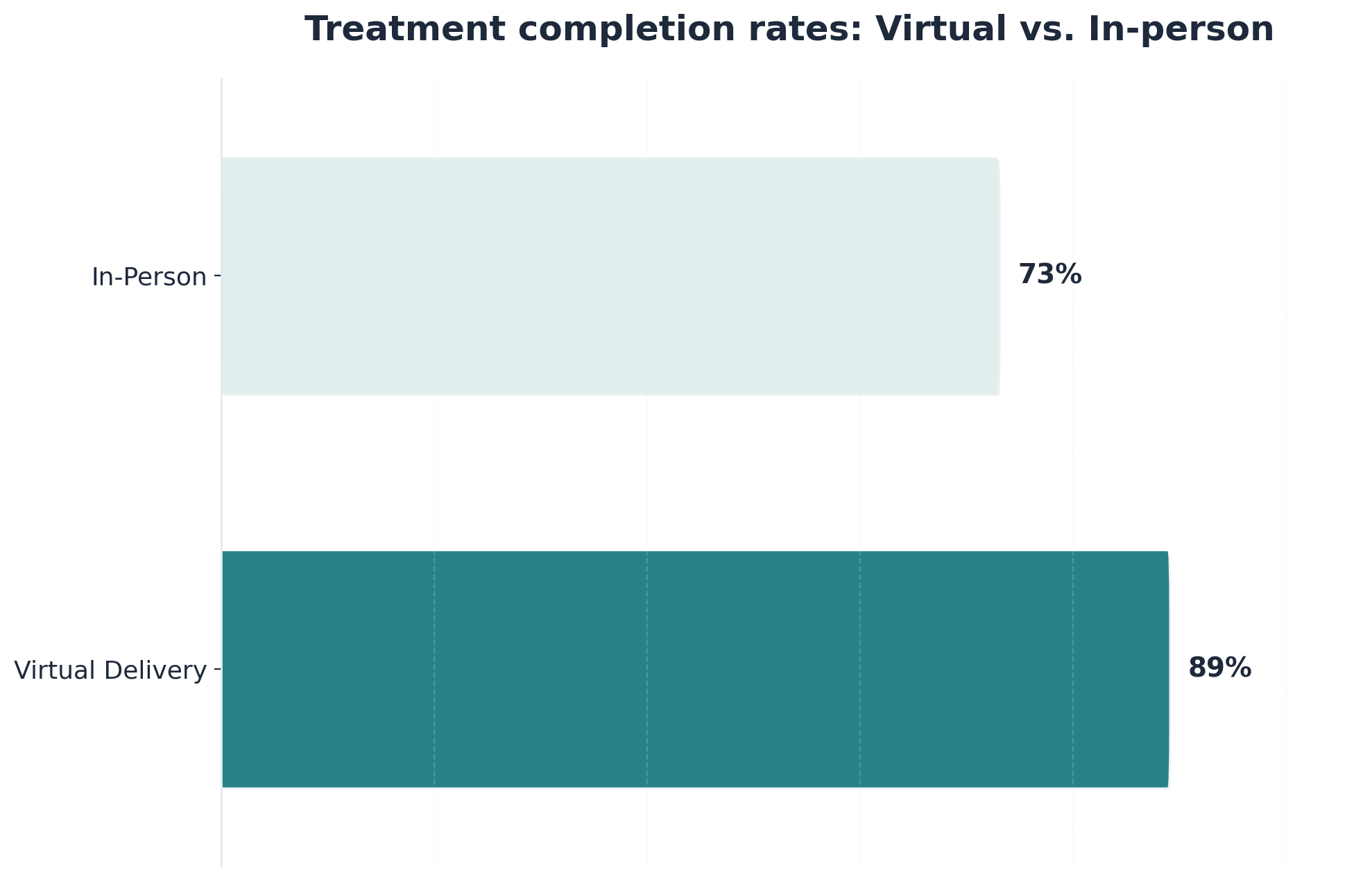
If you’re worried about missing sessions due to a packed calendar, you’re not alone. Virtual programs report higher completion rates—up to 89% compared to 73% for in-person care—meaning more professionals actually stick with their recovery plan3. Every step you take to remove friction from your schedule increases your odds of success.
Checklist: Pinpointing Your Schedule and Privacy Priorities
Let’s be real—balancing recovery with a demanding job isn’t just about finding time. It’s about protecting your privacy and honoring the non-stop pace of your professional life. More than 80% of professionals in recovery say that privacy is their number one concern when choosing a care model7. Virtual treatment can offer the discretion and flexibility you need, but only if it aligns with your real-world routines and personal boundaries.
Start by mapping out your typical workweek. Block out non-negotiable meetings, peak performance hours, and travel days. Then, identify windows where you can consistently step away—maybe early mornings, late afternoons, or lunch breaks. This groundwork is what allows you to pursue care without raising red flags or sacrificing your effectiveness on the job.
Consider this method if you thrive on structure, value privacy, and want to avoid the stress of explaining absences. When your schedule is erratic or your workspace lacks confidentiality, you might explore other options or request additional workplace accommodations. Remember, every step you take to clarify your needs is a win on your recovery journey.
Decision Tool: Which Level of Treatment Suits Your Role?
Finding the right treatment intensity is about honoring both your commitment to recovery and the realities of your workload. Outpatient programs come in different formats. Partial Hospitalization Programs (PHP) typically involve 4–6 hours per day, several days a week. Intensive Outpatient Programs (IOP) offer 2–3 hour blocks, often in the early morning or evening, requiring a time investment of about 9 to 15 hours weekly. This path makes sense for professionals who need strong support but can’t step away from their roles for extended periods.
A recent meta-analysis shows that virtual treatment models deliver higher completion rates—89% for virtual care versus 73% for in-person—when participants can match program intensity to their work responsibilities3. If you’re in a leadership position or hold a critical role, IOP’s lighter structure may let you stay engaged at work while still receiving robust support. Out-of-pocket costs for IOP can range from $250 to $500 per week depending on your commercial insurance plan, making it a highly accessible option compared to residential care.
On the other hand, if you’re managing severe symptoms or have recently relapsed, a PHP schedule might be necessary, even if it means negotiating more flexible hours with your employer. Every adjustment you make to align treatment with your real-world demands is a step toward sustainable recovery.
Quick Self-Assessment: Is Intensive Outpatient a Match?
Intensive Outpatient Programs (IOPs) delivered through virtual treatment offer a powerful balance for professionals who need meaningful recovery support without risking job security. Instead of pausing your career, you can access evidence-based care—think cognitive behavioral therapy, peer support, and relapse prevention—on a schedule built around your real work life. Virtual IOPs have been shown to boost treatment completion rates up to 89%, compared to just 73% for traditional in-person models3. That’s a tangible advantage when your time and privacy matter most.
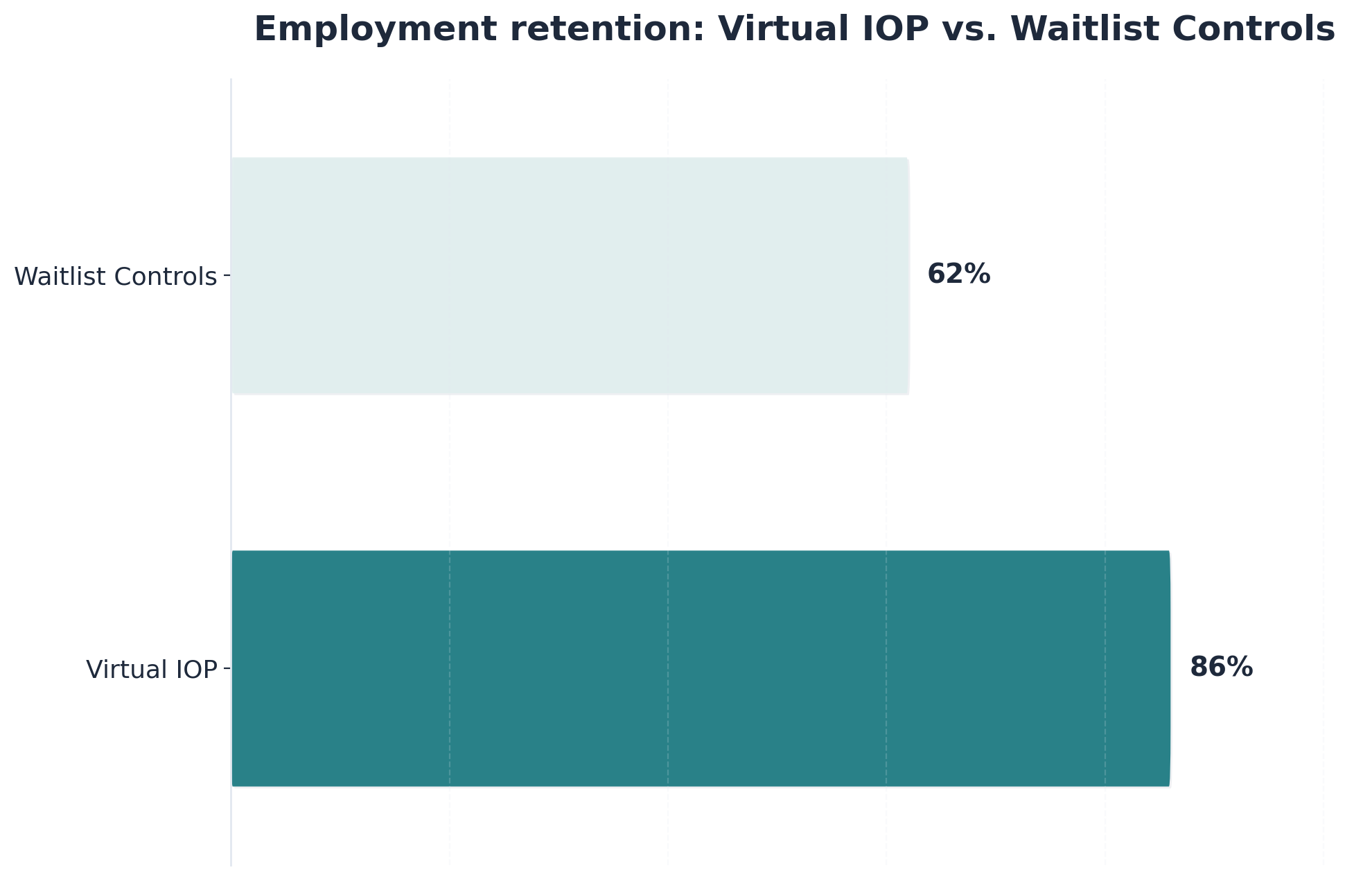
This solution fits professionals who thrive with structure but can’t step away from their roles for days or weeks at a time. You’ll benefit from consistent progress, immediate feedback, and peer connection—all while safeguarding your job and reputation. Research also shows employment retention rates of 86% for workers enrolled in virtual IOP, compared to 62% in standard waitlist groups5. Every session you attend is a step forward, both in your recovery and your career.
Quick Assessment: Is Medication-Assisted Treatment (MAT) Right for You?
Medication-Assisted Treatment (MAT) combines FDA-approved medications—like buprenorphine (Suboxone) or naltrexone—with behavioral therapies, all delivered through virtual treatment platforms. For working professionals, being able to access MAT from home or the office means you can get the medical support you need without missing important meetings or sharing sensitive health details at work. The resource requirements are manageable: typically monthly virtual visits, a daily medication routine, and pharmacy copays that generally range from $10 to $50 per month.
Research has shown that telehealth MAT is just as effective as in-person care for substance use disorders, with treatment completion rates even higher due to easier access and flexible scheduling2. Opt for this framework when you manage ongoing cravings, have a history of relapse, or need medical stabilization to keep up with work demands.
If you’re juggling intense deadlines or unpredictable hours, virtual MAT provides timely prescription management, regular check-ins with clinicians, and confidential support—so you can keep progressing in recovery without putting your career on hold. You’re not alone in needing this level of support; 76% of workers in recovery cite accessibility as the most important factor in staying employed during treatment7.
Checklist: Safeguarding Your Privacy at Work
Navigating confidentiality can feel overwhelming, but you’re not alone—82% of workers in recovery say privacy is the main reason they choose virtual treatment7. Virtual care delivers a powerful layer of protection since sessions happen away from the office and don’t require explaining absences to supervisors. Most platforms are built to meet strict healthcare privacy standards (like HIPAA), so your information stays secure.
Remember, you are never required to disclose your participation in treatment to your employer unless you choose to. If you use insurance, only the minimal necessary billing details are shared—diagnoses and session notes remain protected by law. Prioritize this when you need discretion to feel safe in recovery and maintain your standing at work. Every moment you invest in understanding your privacy rights is a step toward both professional and personal stability.
Employment retention matters—a lot—when you’re balancing recovery and a demanding career. Let’s look at the data: workers who participate in coordinated mental health and substance use programs are 2.5 times more likely to keep their jobs than those who don’t access this support6. That’s not just a number; it’s peace of mind that your recovery work can actually protect your professional future.
| Treatment Model | Employment Retention Rate | Program Completion Rate |
|---|---|---|
| Virtual Intensive Outpatient (IOP) | 86% | 89% |
| Standard Waitlist / In-Person | 62% | 73% |
Virtual treatment takes this a step further. In recent studies, professionals enrolled in virtual intensive outpatient programs (IOP) saw 86% employment retention, compared to only 62% for workers on waitlists5. You’re making a strong move for your career every time you log in—consistency in care means greater job stability.
For many, productivity bounces back quickly. Research shows that within eight weeks of starting virtual IOP, most workers’ performance returns to baseline5. Consider this route if you are worried about work gaps or the risk of job loss due to time off for in-person treatment. Every effort you put into recovery counts toward your ongoing success at work.
You've made it this far—now it's time to turn insight into action. The next 30 days can set the foundation for meaningful change, and here's the reality: you're already managing a complex professional life. This isn't about starting from scratch; it's about strategically integrating recovery support into the structure you've already built.
Week one is about professional-grade observation. Notice patterns during your workday without judgment. Is stress highest before client meetings? After difficult calls? During the commute home? Use the same tracking tools you already rely on—a notes app, calendar reminders, or a simple spreadsheet. Document what you notice: energy dips, decision fatigue, moments when old patterns surface. This data becomes your strategic roadmap, and it stays completely private.
In week two, establish discreet support connections. This might look like a morning virtual check-in before you log on for work, a lunch-hour call that fits your schedule, or an evening session after business hours. The key is finding support that doesn't require explaining absences or disrupting your professional commitments. Virtual options give you privacy and flexibility—no one needs to know what's on your calendar between meetings.
Weeks three and four are about sustainable integration, not disruption. Add one recovery practice that complements your existing routine: a brief morning reflection before you start your day, a midday reset between calls, or an evening wind-down that helps you transition out of work mode. These aren't additions that compete with your professional obligations—they're strategic practices that enhance your capacity to perform at the level you expect from yourself.
Remember, you're not rebuilding your life—you're reinforcing it. Some days will require more navigation than others, and that's part of managing any significant professional challenge. What matters is that you're moving forward with the same intentionality you bring to everything else that matters in your career.
If you reside in Vermont, Massachusetts, Connecticut, or New Hampshire, Pathfinder Recovery offers a fully virtual continuum of care designed for professionals like you. We provide Intensive Outpatient Programs, Medication-Assisted Treatment, and support for co-occurring mental health conditions alongside substance use disorder treatment. You don't have to step away from your life to save it.
Yes, you can participate in virtual treatment sessions during your work breaks, and many professionals do just that. The flexibility of virtual care allows you to schedule sessions around your work commitments, including early mornings, lunch breaks, or late afternoons. In fact, 87% of professionals cite access around busy work schedules as the main barrier to seeking help, and virtual treatment is specifically designed to overcome this challenge4. Just make sure you have access to a private, quiet space and a reliable internet connection for confidentiality. Every time you invest in your recovery during the workday, you’re making progress that fits your real life.
It’s completely normal to miss a virtual treatment session now and then, especially when unexpected work demands pop up. Most virtual programs are designed with flexibility in mind—allowing you to reschedule or make up sessions so you don’t lose momentum in your recovery. In fact, evidence shows that virtual care models reduce no-show rates by up to 45% compared to in-person treatment, thanks to this adaptable approach2. If you know you’ll need to miss a session, reach out to your care team as soon as possible. They’ll help you adjust your schedule and support your continued progress, even when work gets hectic.
Technical issues can happen to anyone during a virtual treatment session, and it's totally normal to feel frustrated when they do. If your connection drops or audio/video cuts out, try refreshing your browser or reconnecting to the call—that solves most simple glitches. Keeping your device updated and testing your internet speed before sessions can prevent many problems. If issues persist, reach out to your provider's tech support or let your therapist know right away; most platforms offer quick troubleshooting or rescheduling options. Virtual care platforms are designed for reliability, which is why no-show rates are up to 45% lower than traditional in-person visits2. You're making progress just by showing up, even if tech troubles pop up along the way.
No, your employer will not be directly notified if you use insurance for virtual treatment. Health privacy laws (like HIPAA) protect your information—only the minimal details needed for billing are shared with your insurance provider, not your workplace. Diagnoses, session notes, and participation in treatment stay confidential and are not disclosed to your employer unless you choose to share them. In fact, 82% of workers in recovery say privacy is a top reason they prefer virtual care7. If you ever have questions or concerns, ask your provider how your information is handled. Your confidentiality remains a priority throughout your recovery journey.
You’re likely wondering when you’ll notice real changes at work after starting virtual treatment. The encouraging news: most professionals see improvements in focus, productivity, and energy within the first eight weeks. In fact, recent studies on virtual intensive outpatient programs show that work performance typically returns to baseline by the two-month mark—meaning you can expect to feel more like yourself at work in a relatively short timeframe5. This approach is ideal for those who want to maintain their career momentum while investing in recovery. Every bit of progress, no matter how small, is worth celebrating as you continue this journey.
Absolutely—you can continue virtual treatment even if you travel frequently for work. As long as you have access to a secure internet connection and a private space, most virtual programs allow you to join sessions from anywhere within the provider’s licensed service area. This flexibility is a major reason 76% of workers in recovery rank accessibility as critical to keeping their jobs7. If you’re traveling across state lines, check with your provider about licensing rules, as regulations can differ and may affect session availability. Staying connected to care, no matter your location, is a powerful way to maintain both your recovery and your professional momentum.
Yes, virtual group therapy sessions can be just as effective as meeting in person when it comes to building meaningful peer support. Studies show that virtual treatment models deliver comparable outcomes for connection, participation, and group cohesion—plus, they dramatically increase attendance rates by removing commute and scheduling barriers2. Many professionals find it easier to open up and build trust in a confidential online setting, especially when privacy is a top concern. This approach works best when you value flexibility and want to connect with peers who understand your professional pressures, all without stepping away from your daily responsibilities. Every connection you make, virtual or not, is a powerful step in your recovery journey.
April 22, 2026

May 23, 2025

November 7, 2025