Written and reviewed by the leadership team at Pathfinder Recovery, including licensed medical and clinical professionals with over 30 years of experience in addiction and mental health care.
Understanding What Is Outpatient Treatment
Understanding what is outpatient treatment begins with the concept of flexible recovery. It is a non-residential approach to substance use disorder care that allows individuals to receive professional support while maintaining their daily responsibilities. Unlike residential or inpatient programs that require living at a treatment facility, this care model lets people attend scheduled counseling appointments and therapeutic activities while continuing to live at home, work, or attend school.
This approach is comparable to physical therapy for an injury—you receive expert clinical support during scheduled sessions but return to your own bed at night. Outpatient programs can serve as a primary step in recovery, a transition from more intensive residential care, or a method for maintaining long-term progress. Studies reveal that outpatient care allows individuals to keep community ties, which is a key part of ongoing recovery success1.
Three Levels of Treatment Intensity
The flexible recovery continuum means that outpatient care adapts based on each person's needs. Instead of a one-size-fits-all approach, individuals might start with intensive treatment and gradually step down to fewer appointments.
Program Type
Intensity & Structure
Best Suited For
Partial Hospitalization (PHP)
High Intensity: 5–6 hours/day, 5–7 days/week.
Individuals needing close monitoring and complex symptom management but who have a safe home environment.
Intensive Outpatient (IOP)
Moderate Intensity: 9–20 hours/week.
Those balancing recovery with work or family duties who need more than weekly therapy.
Maintenance phase recovery or those with mild symptoms and strong support systems.
Research confirms that matching the intensity of outpatient addiction treatment to a person’s stage of recovery leads to the best results23. These levels allow treatment to fit a person’s needs as they change over time, creating a flexible path to recovery.
How What Is Outpatient Care Works in Practice
The core components of these programs include individual counseling, group therapy, medication management when appropriate, and skill-building workshops focused on relapse prevention. Most programs begin with a comprehensive assessment to evaluate the severity of addiction and identify co-existing psychological conditions.
Telemedicine Utilization by SUD Organizations (Breakdown of the most commonly utilized telemedicine applications by substance use disorder (SUD) organizations, showing highest use for screening tools. Source: 7)
A typical week might include individual counseling with a licensed therapist, group meetings to build peer connections, and psychoeducation classes. The schedule adapts to real life rather than replacing it. For example:
A participant might attend group therapy in the morning and work an afternoon shift.
Another might drop children at school, attend a two-hour IOP session, and return home by early afternoon.
Evening programs accommodate those with daytime obligations, typically running from 6:00 PM to 9:00 PM.
"Studies reveal that up to 60% of patients in CBT-based outpatient addiction treatment programs provided clean toxicology screens at a 52-week follow-up, showing strong long-term results." 14
Key therapies include:
Cognitive-Behavioral Therapy (CBT): Helps individuals spot negative thought patterns and learn healthier ways to respond to cravings or stress.
Motivational Interviewing: Acts like a supportive coach helping individuals explore their own reasons for making positive changes.
Group Therapy & Peer Support: Models like 12-step or SMART Recovery reduce isolation and strengthen motivation32.
Medication-Assisted Treatment (MAT) Integration
MAT combines FDA-approved medications with counseling and therapy. Medications like buprenorphine, methadone, and naltrexone act like training wheels on a bike: they help stabilize recovery while individuals learn new skills through counseling. Research shows that combining these medications with behavioral support leads to better and longer-lasting recovery outcomes compared to therapy alone5.
With the rise of virtual outpatient care, people can now access prescription management and check-ins online. This setup works a bit like online banking—it lets people manage important health tasks from home while maintaining privacy.
Why Outpatient Care Delivers Results
Outpatient treatment has proven highly effective for individuals seeking recovery. A 2020 study published in the Journal of Substance Abuse Treatment found that individuals who completed structured outpatient programs achieved 12-month sobriety rates of 68%, comparable to residential treatment outcomes.
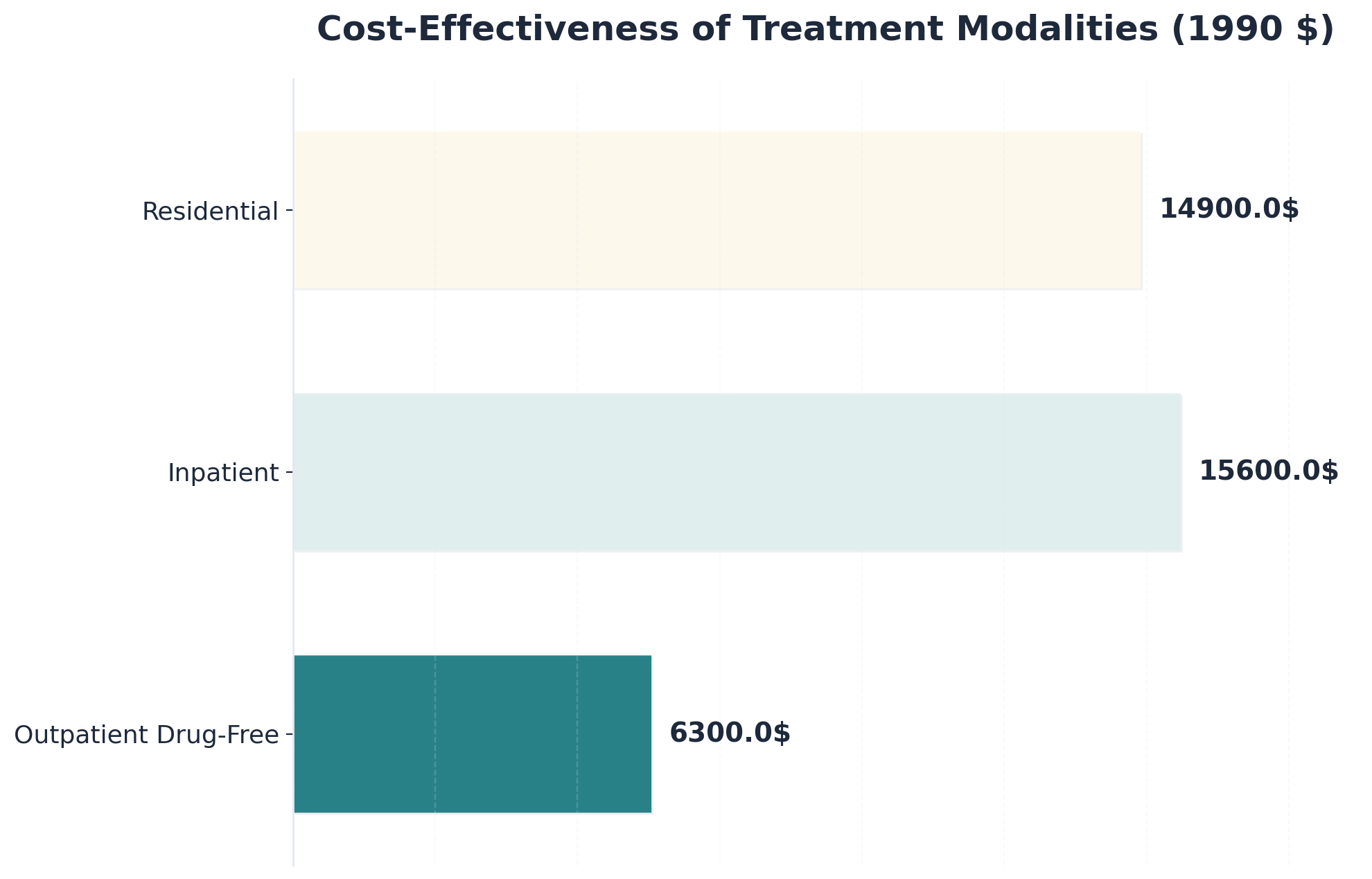
Cost-Effectiveness of Treatment Modalities (1990 $) (Compares the cost per successfully treated abstinent case in 1990 dollars across different treatment modalities, showing outpatient care as the most cost-effective. Source: 11)
The flexibility of this approach allows individuals to immediately apply recovery skills in real-world situations. Rather than learning coping strategies in isolation, participants face actual triggers and stressors while having professional support readily available. This hands-on practice strengthens recovery skills and builds confidence.
Proven Effectiveness and Cost Savings
Comparable outcomes at a lower cost are a major reason why what is outpatient care continues to grow in popularity. Research highlights that outpatient drug-free programs cost less than half per successfully treated case compared to inpatient care—approximately $6,300 versus $15,600—while delivering similar results11.
Additionally, maintaining work and family connections is a standout strength. Studies show that being able to remain active in work and family life boosts motivation and treatment retention1, 2.
Specialized Care for Unique Needs
Outpatient programs are designed to go beyond a generic approach by offering services that address co-occurring mental health conditions, trauma histories, and neurodivergence.
Co-Occurring Disorders: About 6.7% of adults face both substance use and a co-occurring mental illness. Integrated care addresses both simultaneously, leading to better outcomes33.
Trauma-Informed Care: Providers work to create an environment where individuals feel understood and not judged, recognizing how past traumas affect healing.
Neurodivergent Support: Programs can adapt to the needs of individuals with ADHD or autism by offering flexible communication and sensory-friendly settings.
Virtual Outpatient Care Expands Access
Technology has transformed addiction treatment by removing traditional barriers. Virtual outpatient services now deliver evidence-based treatment directly to individuals in their homes. This is particularly valuable for Pathfinder's service areas in Vermont, Massachusetts, Connecticut, and New Hampshire, where rural geography can otherwise limit access to specialized care.
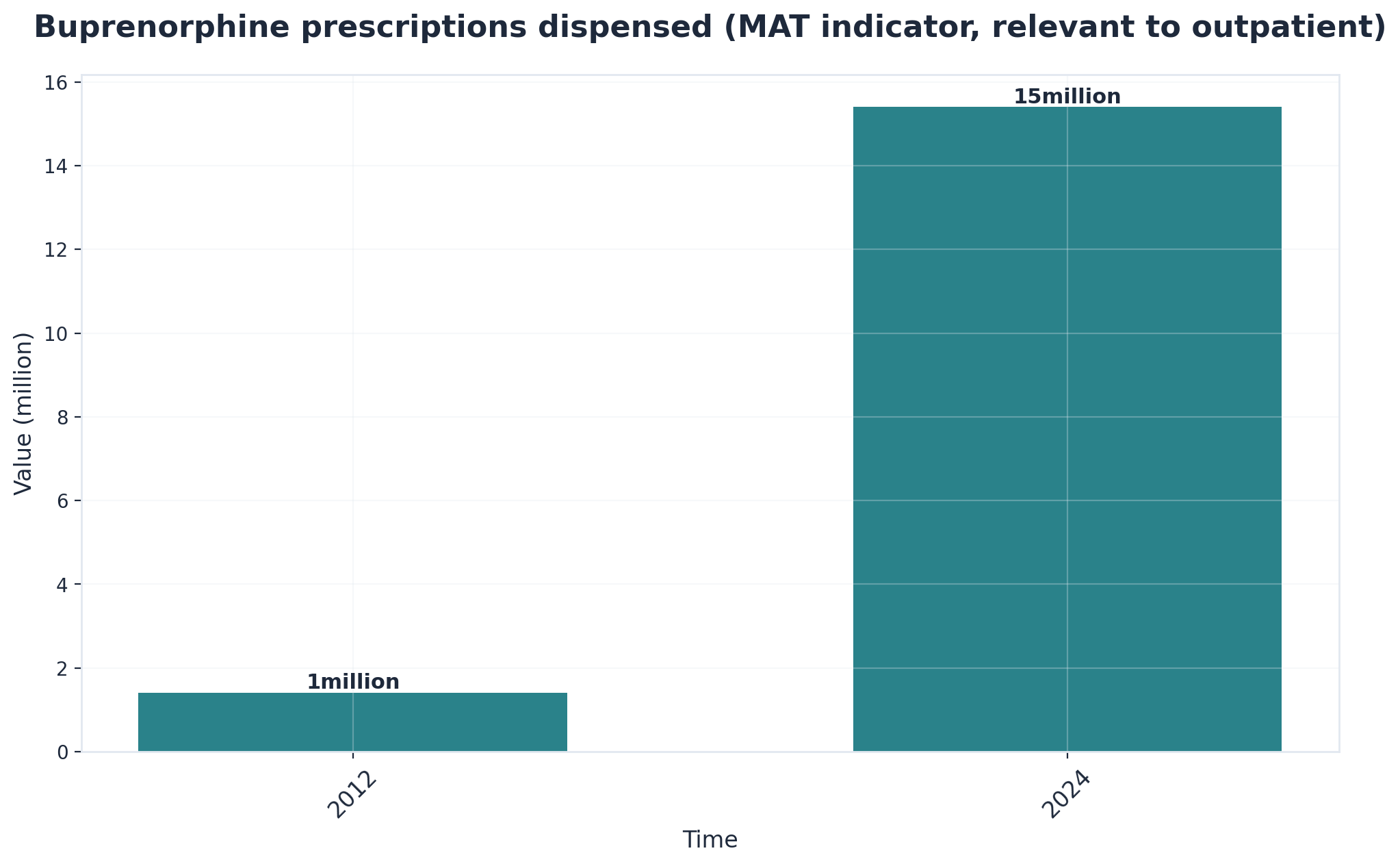
Buprenorphine prescriptions dispensed (MAT indicator, relevant to outpatient) (Source: Time for decisive action on substance-use disorder treatment)
Evidence from healthcare systems implementing telehealth addiction treatment indicates that virtual services can achieve outcomes comparable to in-person sessions. The key difference lies in accessibility—virtual platforms can reach individuals who might otherwise go without treatment due to geographic or logistical constraints.
Telehealth Transforms Treatment Delivery
With secure video calls and online platforms, individuals can now meet with therapists, doctors, or support groups right from home. This shift makes outpatient addiction treatment as easy to access as online shopping or virtual school.
Research-backed evidence shows that virtual outpatient care stands toe-to-toe with traditional, in-person treatment. Patients report similar satisfaction, engagement, and recovery rates17. Furthermore, virtual care helps overcome privacy barriers; with secure video sessions, individuals can seek support without worrying about being seen entering a clinic.
Long-Term Support and Relapse Prevention
Outpatient addiction treatment doesn’t simply end after the last therapy session. Ongoing support like aftercare planning, alumni programs, and peer recovery groups play a key role. Studies show that relapse rates after formal treatment are between 40% and 60%, similar to other chronic health conditions like diabetes31.
Virtual outpatient programs make it easier to stay connected with counselors and peer mentors for ongoing encouragement and accountability, bridging the gap between formal care and community life.
Finding the Right Outpatient Solution
While virtual care expands access to treatment, selecting the right program requires a systematic evaluation process. Consider these key factors:
Match intensity to clinical need: The treatment level should align with the severity of addiction. Honest assessment, ideally with professional guidance, helps identify whether you need IOP, PHP, or standard care.
Verify evidence-based treatment approaches: Look for programs utilizing CBT, dialectical behavior therapy, and motivational interviewing. Ensure they integrate treatment for co-occurring psychological conditions.
Assess practical logistics: Geographic accessibility and schedule flexibility are essential. Virtual therapy options can be the difference between maintaining employment and choosing between recovery and financial stability.
Clarify financial responsibilities: Verify benefits and understand financial responsibilities upfront. Most rehabilitation services accept various insurance plans, but coverage levels vary.
Evaluate family involvement and aftercare: Programs that incorporate family education and support tend to produce better outcomes. Ensure there is clear transition planning to less intensive services.
Recovery, Made Possible — From Home
Pathfinder Recovery offers in-home addiction and mental health treatment that fits your life — not the other way around.From at-home detox and MAT to virtual IOP and peer support, our licensed clinicians bring evidence-based care to you through secure telehealth.
Choosing a recovery program raises many questions. Understanding what to expect can help individuals and families make more informed decisions about their care journey.
Can I continue working full-time while attending outpatient treatment?
Yes, many people continue working full-time while participating in what is outpatient treatment for substance use disorder. Outpatient addiction treatment is specifically designed to fit around daily responsibilities, including employment. Scheduling is often flexible, with sessions offered in the evenings, early mornings, or even virtually. Studies show that maintaining work and family connections is a key strength of outpatient care—being able to stay active in your job can boost motivation and help you stick with treatment1, 2.
How does virtual outpatient treatment compare to in-person care in terms of effectiveness?
Virtual outpatient treatment is shown to be just as effective as traditional in-person care for substance use disorder. Research comparing online and face-to-face outpatient programs found no difference in patient satisfaction, substance use outcomes, or how well people stayed engaged with therapy17. This means that people choosing virtual outpatient addiction treatment can expect results similar to those attending in-person sessions.
Will my employer or colleagues find out if I attend virtual outpatient treatment?
Virtual outpatient treatment is designed to protect your privacy, so your employer or colleagues will not be notified that you are attending unless you choose to share that information. Sessions are held on secure telehealth platforms, and all communication is confidential. Research shows that concerns about privacy are common, but telehealth makes it easier for individuals to access what is outpatient care without being seen entering a clinic17.
What happens if I relapse during or after outpatient treatment?
If a relapse happens during or after what is outpatient treatment, it's important to remember that this is a common part of the recovery process. Studies show that between 40% and 60% of individuals experience a relapse after formal treatment31. Outpatient addiction treatment programs are designed to help people get back on track—providers can adjust the treatment plan, offer additional support, or recommend a different level of care if needed.
Does outpatient treatment work for people with co-occurring mental health conditions?
Yes, outpatient treatment can work well for people with co-occurring mental health conditions, as long as the program is designed to support both substance use disorder and mental health challenges together. Research shows that about 6.7% of adults have both a substance use disorder and a co-occurring mental illness, and individuals do best when these issues are treated at the same time33.
How much does outpatient treatment cost compared to inpatient rehab?
Outpatient treatment is typically much more affordable than inpatient rehab. Studies reveal that the cost per successfully treated case in an outpatient addiction treatment program is about $6,300, while inpatient programs can cost around $15,600 for the same outcome—less than half the price11. Research also shows that outpatient care can offer overall savings of 17% to 60% compared to inpatient services10.
Can I receive medication-assisted treatment through a virtual outpatient program?
Yes, you can receive medication-assisted treatment (MAT) through a virtual outpatient program. Modern outpatient addiction treatment often includes virtual options for medication management via secure video calls. Studies reveal that telehealth-based prescription management is just as safe and effective as in-person visits, offering high satisfaction and expanding access to care7.
Is outpatient treatment suitable for someone who has been through rehab before and relapsed?
Yes, outpatient treatment can be a strong option for someone who has been through rehab before and experienced a relapse. What is outpatient care allows individuals to re-engage with therapy, peer support, and medication-assisted treatment while staying involved in daily life. Many programs include relapse prevention strategies and aftercare planning to help rebuild progress.
How do I know if I need PHP, IOP, or standard outpatient care?
Deciding between Partial Hospitalization Programs (PHP), Intensive Outpatient Programs (IOP), or standard outpatient care depends on your personal needs. PHP offers the most structured support (5+ hours/day), IOP is less intensive (9-20 hours/week), and standard outpatient care typically involves fewer than nine hours per week. Studies reveal that matching the intensity of outpatient addiction treatment to your recovery stage leads to the best results23.
Are outpatient programs adapted for neurodivergent individuals with ADHD or autism?
Yes, many outpatient programs are thoughtfully adapted for neurodivergent individuals. What is outpatient care often involves flexible therapy options, sensory-friendly environments, and communication styles that meet a wide range of needs. Studies reveal that tailoring care to support neurodiversity leads to better engagement and improved outcomes in recovery33.
Can family members participate in my outpatient treatment?
Yes, family members can often participate in your outpatient treatment. Outpatient addiction treatment frequently includes family therapy sessions or educational groups. Studies reveal that including family in what is outpatient care strengthens relationships and provides a stronger support system, which can improve recovery outcomes1, 2.
What states does Pathfinder serve for virtual outpatient treatment?
Pathfinder serves individuals in Vermont, Massachusetts, Connecticut, and New Hampshire with virtual outpatient treatment for substance use disorder and co-occurring mental health needs. Virtual care makes what is outpatient treatment more accessible by allowing people to attend therapy from home, which research shows helps break down barriers to care7, 17.
Is it safe to detox at home with virtual outpatient support?
For most people, detoxing from drugs or alcohol at home is not considered safe unless a medical provider has specifically approved it. Research shows that outpatient detoxification can be safe only for individuals with mild to moderate withdrawal symptoms who have a stable home environment2, 23. If someone is at risk for severe withdrawal, inpatient detox is usually needed.
Does insurance typically cover virtual outpatient treatment?
Most insurance plans, including many private and public options, do cover virtual outpatient treatment for substance use disorder. Coverage usually includes services delivered through secure video calls. Studies reveal that cost and insurance coverage remain important factors in accessing what is outpatient care16, 1.
No items found.
{"@context":"https://schema.org","@type":"FAQPage","mainEntity":[{"@type":"Question","name":"Can I continue working full-time while attending outpatient treatment?","acceptedAnswer":{"@type":"Answer","text":"Yes, many people continue working full-time while participating in what is outpatient treatment for substance use disorder. Outpatient addiction treatment is specifically designed to fit around daily responsibilities, including employment. Scheduling is often flexible, with sessions offered in the evenings, early mornings, or even virtually."}},{"@type":"Question","name":"How does virtual outpatient treatment compare to in-person care in terms of effectiveness?","acceptedAnswer":{"@type":"Answer","text":"Virtual outpatient treatment is shown to be just as effective as traditional in-person care for substance use disorder. Research comparing online and face-to-face outpatient programs found no difference in patient satisfaction, substance use outcomes, or how well people stayed engaged with therapy."}},{"@type":"Question","name":"Will my employer or colleagues find out if I attend virtual outpatient treatment?","acceptedAnswer":{"@type":"Answer","text":"Virtual outpatient treatment is designed to protect your privacy, so your employer or colleagues will not be notified that you are attending unless you choose to share that information. Sessions are held on secure telehealth platforms, and all communication is confidential."}},{"@type":"Question","name":"What happens if I relapse during or after outpatient treatment?","acceptedAnswer":{"@type":"Answer","text":"If a relapse happens during or after what is outpatient treatment, it is important to remember that this is a common part of the recovery process. Programs are designed to help people get back on track by adjusting the treatment plan or offering additional support."}},{"@type":"Question","name":"Does outpatient treatment work for people with co-occurring mental health conditions?","acceptedAnswer":{"@type":"Answer","text":"Yes, outpatient treatment can work well for people with co-occurring mental health conditions, provided the program is designed to support both substance use disorder and mental health challenges together through integrated therapy and medication management."}},{"@type":"Question","name":"How much does outpatient treatment cost compared to inpatient rehab?","acceptedAnswer":{"@type":"Answer","text":"Outpatient treatment is typically much more affordable than inpatient rehab. Studies reveal that the cost per successfully treated case in an outpatient addiction treatment program is significantly lower, often less than half the price of inpatient programs."}},{"@type":"Question","name":"Can I receive medication-assisted treatment through a virtual outpatient program?","acceptedAnswer":{"@type":"Answer","text":"Yes, you can receive medication-assisted treatment (MAT) through a virtual outpatient program. Modern outpatient addiction treatment often includes virtual options for medication management via secure video calls."}},{"@type":"Question","name":"Is outpatient treatment suitable for someone who has been through rehab before and relapsed?","acceptedAnswer":{"@type":"Answer","text":"Yes, outpatient treatment can be a strong option for someone who has been through rehab before and experienced a relapse. It allows individuals to re-engage with therapy and support while staying involved in daily life."}},{"@type":"Question","name":"How do I know if I need PHP, IOP, or standard outpatient care?","acceptedAnswer":{"@type":"Answer","text":"Deciding between Partial Hospitalization Programs (PHP), Intensive Outpatient Programs (IOP), or standard outpatient care depends on your personal needs. PHP offers the most structure, IOP offers a balance of structure and flexibility, and standard outpatient is best for those with stable environments and milder symptoms."}},{"@type":"Question","name":"Are outpatient programs adapted for neurodivergent individuals with ADHD or autism?","acceptedAnswer":{"@type":"Answer","text":"Yes, many outpatient programs are adapted for neurodivergent individuals. Care often involves flexible therapy options, sensory-friendly environments, and communication styles that meet a wide range of needs."}},{"@type":"Question","name":"Can family members participate in my outpatient treatment?","acceptedAnswer":{"@type":"Answer","text":"Yes, family members can often participate in outpatient treatment. Programs frequently include family therapy sessions or educational groups to help loved ones understand the recovery process."}},{"@type":"Question","name":"What states does Pathfinder serve for virtual outpatient treatment?","acceptedAnswer":{"@type":"Answer","text":"Pathfinder serves individuals in Vermont, Massachusetts, Connecticut, and New Hampshire with virtual outpatient treatment for substance use disorder and co-occurring mental health needs."}},{"@type":"Question","name":"Is it safe to detox at home with virtual outpatient support?","acceptedAnswer":{"@type":"Answer","text":"For most people, detoxing at home is not considered safe unless a medical provider has specifically approved it. Inpatient detox is usually needed for those at risk of severe withdrawal. Always consult a healthcare provider."}},{"@type":"Question","name":"Does insurance typically cover virtual outpatient treatment?","acceptedAnswer":{"@type":"Answer","text":"Most insurance plans do cover virtual outpatient treatment for substance use disorder, treating it similarly to in-person sessions. However, coverage varies by plan and provider."}}]}
Conclusion
Navigating the journey of recovery requires dedication, support, and access to the right resources. Throughout this guide, we've explored the essential components of effective addiction treatment, from understanding evidence-based approaches to recognizing the importance of integrated care for concurrent psychiatric conditions. Recovery is not a one-size-fits-all process, and finding treatment that addresses individual needs makes all the difference in achieving lasting wellness.
The landscape of addiction treatment continues to evolve, with virtual care options expanding access to quality support for individuals who might otherwise face barriers to treatment. Telehealth services have opened new pathways to recovery, allowing people to receive comprehensive care while maintaining their daily responsibilities and staying connected to their support networks.
The first step is to reach out for a confidential consultation with a licensed treatment provider who can assess your unique situation and recommend appropriate care options. Whether you're exploring outpatient therapy, medication-assisted treatment, or comprehensive psychiatric support, professional guidance will help you identify the approach that best fits your needs and circumstances.
References
Recovery, Made Possible — From Home
Pathfinder Recovery offers in-home addiction and mental health treatment that fits your life — not the other way around.From at-home detox and MAT to virtual IOP and peer support, our licensed clinicians bring evidence-based care to you through secure telehealth.
The Pathfinder Recovery App and Smart Ring keep your care team connected to your progress between sessions — monitoring sleep, stress, and recovery milestones in real time.It’s proactive, private, and personalized — so support is always within reach.
Experience Art and Music Therapy online with Pathfinder Recovery. Creative, accessible virtual care that supports healing, expression, and emotional well-being.
Dual Diagnosis Therapy made accessible and stigma-free. Pathfinder Recovery offers virtual care from home to support mental health and addiction recovery