Written and reviewed by the leadership team at Pathfinder Recovery, including licensed medical and clinical professionals with over 30 years of experience in addiction and mental health care.
What Is 7-OH and Is 7-OH Addictive?
Quick Definition:7-hydroxymitragynine (7-OH) is a potent alkaloid derived from the kratom plant. While natural kratom leaves contain trace amounts, modern synthetic products concentrate this chemical to levels that mimic powerful opioids.
Many people discovering these products at gas stations or online vape shops find themselves asking, is 7-OH addictive? The short answer is yes. While kratom itself contains this compound naturally in small amounts, manufacturers have begun producing highly concentrated synthetic versions that deliver significantly stronger effects. This concentrated form has raised serious concerns among healthcare professionals due to its powerful impact on the brain's mu-opioid receptors.
The danger lies in its potency. Studies show that 7-OH binds to mu-opioid receptors with approximately 10 times greater affinity than morphine, making it substantially more powerful than the natural kratom leaf. When consumed in concentrated forms (often sold as "isolates" or "extracts"), it produces effects similar to prescription opioids and heroin, including pain relief, sedation, and euphoria.
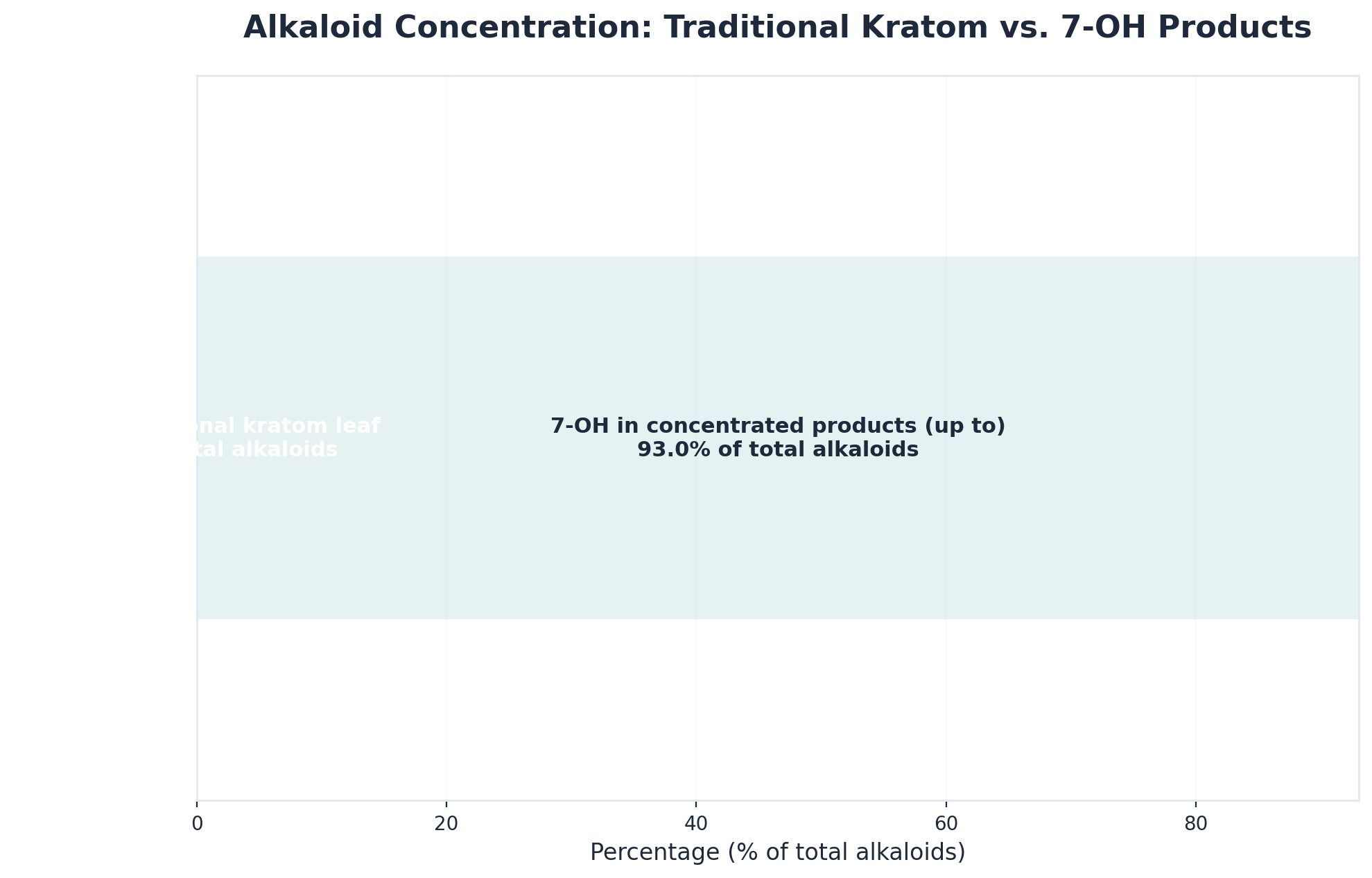
Figure 1: Comparison of natural leaf vs. synthetic 7-OH concentrations.
This escalating potency creates additional risks due to the lack of regulation. Products sold online often contain varying concentrations, making it nearly impossible for you to know exactly what you're consuming. This inconsistency directly increases the risk of overdose, especially for individuals who may be using it to self-medicate for pain or mental health conditions.
The compound's effects extend beyond immediate intoxication, creating a cascade of dangerous physiological responses. Users report experiencing respiratory depression, severe nausea, confusion, and loss of consciousness. The respiratory depression is particularly concerning because it mirrors the primary mechanism of opioid overdose deaths.
The Science: Is 7-OH Addictive and How It Affects the Brain?
The addictive potential of this mitragynine metabolite raises significant concerns among healthcare professionals. This compound activates the same mu-opioid receptors in the brain as prescription painkillers and illicit opioids, creating a neurological pathway that can lead to physical dependence and addiction. When you ask is 7-OH addictive, you are essentially asking if it hijacks the brain's reward system—and the science confirms that it does.
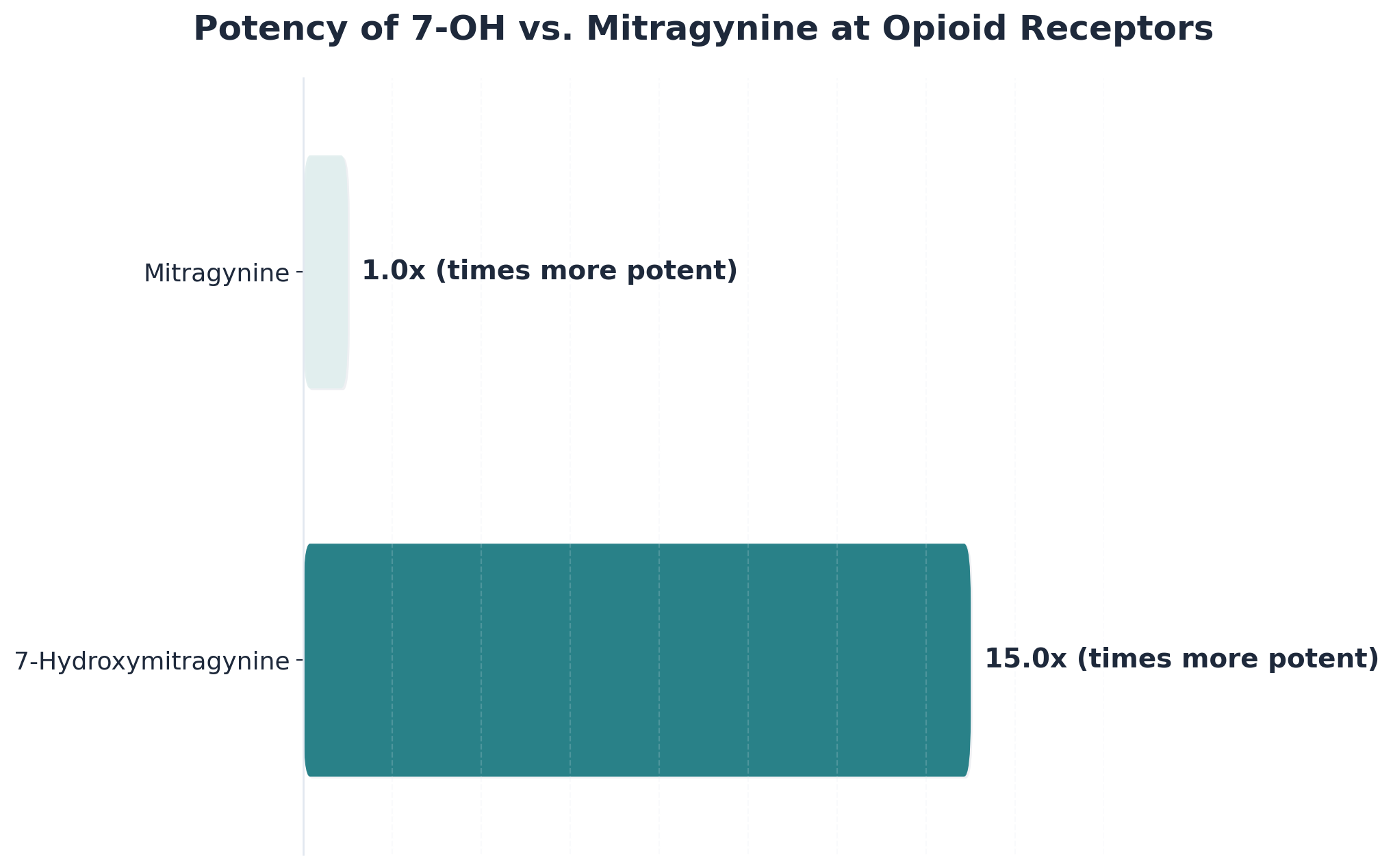
Potency of 7-OH vs. Mitragynine at Opioid Receptors (Shows that 7-hydroxymitragynine is approximately 15-fold more potent than its parent compound, mitragynine, at activating mu-opioid receptors. A bar chart comparing the two would be effective.)
"7-OH binds to mu-opioid receptors with up to 15–22 times more potency than its parent compound, mitragynine. Its receptor affinity rivals or exceeds morphine’s in key overdose-related effects."14
Physical dependence can develop relatively quickly with consistent use. When individuals attempt to stop or reduce their intake, they may experience withdrawal symptoms including muscle aches, anxiety, irritability, insomnia, and intense cravings. These uncomfortable symptoms often drive continued use, even when the person recognizes the negative impact on their life.
Self-Assessment: Are You at Risk?
If you are currently using 7-OH products, use this checklist to evaluate your risk level. Answering "Yes" to 2 or more suggests a developing dependence.
Tolerance: Do you need more 7-OH today to get the same effect you got last month?
Withdrawal: Do you feel flu-like symptoms (chills, sweats, aches) within 6-12 hours of your last dose?
Preoccupation: Do you spend significant time thinking about how to get your next dose or ensuring you don't run out?
Impact: Has your use affected your work performance, finances, or relationships?
Withdrawal from 7-hydroxymitragynine typically begins within 6 to 24 hours of the last dose. Most people experience the peak intensity of withdrawal between 24 and 72 hours. While the bulk of symptoms usually resolve within 3 to 7 days, the psychological cravings can persist, making professional support vital.
Rising Usage and Legal Status in New England
The surge in this potent alkaloid's availability has created a growing public health concern. Emergency departments have reported a 350% increase in kratom-related visits between 2018 and 2022, with concentrated mitragynine products accounting for a disproportionate share of severe cases. Poison control centers have documented a sharp increase in calls related to kratom and concentrated mitragynine derivative products, rising from approximately 1,800 calls in 2019 to over 3,200 in 2022.
Alkaloid Concentration: Traditional Kratom vs. 7-OH Products (Illustrates the drastic difference in concentration. While 7-OH is less than 0.05% of alkaloids in natural kratom leaf, concentrated products can contain up to 93% 7-OH. This can be visualized with a stacked bar or side-by-side comparison.)
Manufacturers often use deceptive marketing, packaging these potent opioids as "herbal supplements" or candy-like gummies to appeal to younger consumers. This has led to a patchwork of legal responses across the country.
Is 7-OH Legal Where You Live?
While the FDA has recommended Schedule I classification (the same category as heroin), federal law has not yet finalized this. However, state laws vary significantly. Here is the current status for the regions Pathfinder Recovery serves:
State
Legal Status of 7-OH
Notes
Vermont
Banned/Restricted
Vermont has strict regulations regarding kratom alkaloids.
Massachusetts
Legal / Monitoring
Not currently scheduled, but under public health review.
Connecticut
Legal / Monitoring
Available, but health advisories are in effect.
New Hampshire
Legal / Monitoring
Available; age restrictions may apply in certain municipalities.
Note: Laws change rapidly. Always check your specific state health department for the most current regulations.
Recovery Pathways: Healing from Home
Understanding that 7-hydroxymitragynine can lead to problematic use is the first step toward reclaiming control. Recovery from this compound's dependence follows similar pathways to other opioid-related disorders. You do not have to pause your career or leave your family to get effective treatment.
Requirements: Stable internet, a safe home environment.
In-Person Rehab
Best for:
Individuals with unstable housing.
Those needing 24/7 physical medical monitoring.
People who need to be removed from their current environment to stay sober.
Requirements: Ability to take 30+ days off work/life.
Your 30-Day Action Plan
If you choose virtual care with Pathfinder Recovery, here is what your first month looks like:
Week 1: Stabilization & Detox. You will meet with a medical provider virtually. If appropriate, Medication-Assisted Treatment (MAT) using buprenorphine may be prescribed to stop cravings and withdrawal sickness.
Week 3: Skill Building. You learn cognitive-behavioral tools to manage triggers in your real-world environment (work, home, stress).
Week 4: Long-Term Planning. We establish a maintenance plan, peer support connections, and ongoing check-ins to ensure lasting recovery.
Cost & Insurance: Many people worry about the cost of treatment. Virtual care is often significantly more affordable than residential rehab. Pathfinder Recovery accepts most major insurance plans, which typically cover medical detox, therapy, and MAT.
Recovery, Made Possible — From Home
Pathfinder Recovery offers in-home addiction and mental health treatment that fits your life — not the other way around. From at-home detox and MAT to virtual IOP and peer support, our licensed clinicians bring evidence-based care to you through secure telehealth.
Can I safely detox from 7-OH at home without medical supervision?
Detoxing from 7-hydroxymitragynine (7-OH) at home without medical supervision is not considered safe. Because 7-OH is a highly potent opioid analog with a strong risk for severe withdrawal and dangerous complications like respiratory depression, experts strongly recommend medically monitored detox—especially for those in Vermont, Massachusetts, Connecticut, or New Hampshire19. Attempting to go it alone increases the chance of relapse and unmanaged cravings.
How do I know if I need medication-assisted treatment (MAT)?
MAT is recommended when cravings for 7-hydroxymitragynine are strong or withdrawal symptoms—such as anxiety, nausea, or agitation—disrupt daily life. If you have tried to quit on your own and relapsed, or find your dosage increasing, MAT (using medications like buprenorphine) can stabilize your brain chemistry and support recovery9.
Will my employer find out if I seek treatment?
Seeking treatment does not automatically mean your employer will be notified. Privacy laws such as HIPAA protect your health information. Virtual programs in Vermont, Massachusetts, Connecticut, and New Hampshire typically require your explicit consent before sharing any information with outside parties. This allows you to address the issue privately while maintaining your career.
How long does withdrawal typically last?
Withdrawal typically begins within 6 to 24 hours of the last dose. Peak intensity occurs between 24 and 72 hours, marked by cravings, nausea, and chills. Most acute symptoms resolve within 3 to 7 days, though mood swings or fatigue may persist for a few weeks14.
Does Pathfinder Recovery accept insurance?
Yes, Pathfinder Recovery accepts most major insurance plans for treatment related to 7-OH dependence. This makes evidence-based virtual care accessible and affordable for individuals in Vermont, Massachusetts, Connecticut, and New Hampshire.
No items found.
{"@context":"https://schema.org","@type":"FAQPage","mainEntity":[{"@type":"Question","name":"Can I safely detox from 7-OH at home without medical supervision?","acceptedAnswer":{"@type":"Answer","text":"Detoxing from 7-hydroxymitragynine (7-OH) at home without medical supervision is not considered safe. Because 7-OH is a highly potent opioid analog with a strong risk for severe withdrawal and dangerous complications like respiratory depression, experts strongly recommend medically monitored detox\u2014especially for those in Vermont, Massachusetts, Connecticut, or New Hampshire. While some might wonder if is 7-OH addictive enough to require this level of care, research shows that withdrawal symptoms can escalate rapidly. For the safest experience, choose a virtual or in-person program with daily monitoring."}},{"@type":"Question","name":"How do I know if I need medication-assisted treatment (MAT) for 7-OH dependence?","acceptedAnswer":{"@type":"Answer","text":"You likely need MAT if you experience strong cravings, physical withdrawal symptoms (nausea, agitation), or have relapsed after trying to quit cold turkey. MAT, using medications like buprenorphine, stabilizes brain chemistry and lowers relapse risk. If you live in New England, a virtual assessment can determine if this is the right clinical path for you."}},{"@type":"Question","name":"Is virtual treatment as effective as in-person rehab for 7-OH addiction?","acceptedAnswer":{"@type":"Answer","text":"Yes, research shows virtual treatment is as effective as in-person rehab for opioid use disorders when it includes evidence-based practices like therapy and medical oversight. It is particularly effective for those who need to maintain employment or family responsibilities while recovering."}},{"@type":"Question","name":"Does insurance cover treatment for 7-OH addiction?","acceptedAnswer":{"@type":"Answer","text":"Yes, Pathfinder Recovery accepts most major insurance plans for 7-OH dependence treatment. Coverage typically includes virtual medical detox, therapy, and ongoing support, significantly lowering out-of-pocket costs. Contact our intake team to verify your specific benefits."}},{"@type":"Question","name":"How long does the initial detox from 7-OH take?","acceptedAnswer":{"@type":"Answer","text":"Acute withdrawal symptoms typically peak within 24 to 72 hours and resolve within 5 to 7 days. However, post-acute symptoms like mood swings or fatigue can last longer. A medically supervised program helps manage this timeline comfortably."}}]}
References
7-Hydroxymitragynin (7-OH): An Assessment of the Scientific Data and Toxicological Concerns Around an Emerging Opioid Threat. FDA.gov
FDA Consumer Updates: Products Containing 7-OH Can Cause Serious Harm. FDA.gov
FDA Takes Steps to Restrict 7-OH Opioid Products Threatening American Consumers. FDA.gov
Pathfinder Recovery offers in-home addiction and mental health treatment that fits your life — not the other way around.From at-home detox and MAT to virtual IOP and peer support, our licensed clinicians bring evidence-based care to you through secure telehealth.
The Pathfinder Recovery App and Smart Ring keep your care team connected to your progress between sessions — monitoring sleep, stress, and recovery milestones in real time.It’s proactive, private, and personalized — so support is always within reach.
Find a Therapist Near Me That Accept Medicaid with Pathfinder. Access virtual care that breaks barriers, supports recovery, and builds a healthier future.
Virtual Addiction Support with Pathfinder Recovery offers flexible online treatment that meets you where you are, supporting safe and effective recovery.
Burnout and Compassion Fatigue care from Pathfinder Recovery offers virtual support that breaks barriers, helping professionals heal and rebuild balance from home.