
Enmeshed Family: Supporting Loved Ones on the Path to Healing
Enmeshed Family dynamics can impact healing. Learn how to support loved ones with guidance from Pathfinder Recovery on setting boundaries and growth.

November 6, 2025


Written and reviewed by the leadership team at Pathfinder Recovery, including licensed medical and clinical professionals with over 30 years of experience in addiction and mental health care.
You already know how methadone works. You know what it has done for you. What you may be quietly weighing is whether the structure around it still fits the life you are actually living right now.
Maybe the dosing window opens at 5:30 a.m. and you are on a 6 a.m. shift. Maybe the closest opioid treatment program is forty minutes away and your car is not always reliable in February. Maybe you have a kid in elementary school and the pickup line and the clinic line are happening at the same time. Maybe nothing has gone wrong at all, and that is exactly why the daily commute feels heavier than it used to.
None of that means treatment is failing you. It often means treatment is working, and the rigid scaffolding around it has not caught up with how stable you have become.
Here is what has actually changed. The 2024 update to 42 CFR Part 8 reshaped how opioid treatment programs admit and care for patients, including removing the old one-year addiction prerequisite and pushing programs toward more patient-centered, flexible plans. Federal telehealth flexibilities for prescribing controlled medications, including buprenorphine, are extended through 2026. Buprenorphine and naltrexone, two of the three FDA-approved medications for opioid use disorder, can be accessed outside an OTP.3,5
The rest of this guide walks you through the realistic alternatives, where each one fits, and where it honestly does not. Wanting a different structure is not the same as wanting to stop. That distinction matters.
Before you can pick a different structure, it helps to be honest about what the menu actually is. There are three FDA-approved medications for opioid use disorder: methadone, buprenorphine, and naltrexone. That number has not changed. What changes between them is where you are allowed to receive them, and that single fact is the reason alternatives to a methadone clinic exist at all.
Methadone, by federal rule, lives inside an opioid treatment program. You go to the OTP, you dose there, and over time you may earn take-homes. There is no community pharmacy version of methadone for OUD. That is the structural reason the daily commute exists.
Buprenorphine is different. It can be prescribed by qualified office-based providers and filled at a community pharmacy, which means you can pick it up the way you would pick up any other prescription. That is the doorway that office-based opioid treatment, or OBOT, walks through. No dosing window, no clinic line — just a prescriber, a pharmacy, and a follow-up cadence that fits a normal calendar.4
Naltrexone, in its extended-release injectable form, is a once-monthly shot administered through standard medical practices. It is a non-agonist, meaning it works very differently from methadone or buprenorphine, but it shares the same off-OTP access pattern.12
So the question is not really methadone versus the other two. It is OTP-only access versus pathways that live in offices, pharmacies, and increasingly on a screen. That is the map. Everything else in this guide is just choosing your route across it.
Say this part out loud, because it gets blurred constantly: changing how you receive medication is not the same as tapering off it. Moving from a methadone clinic to office-based buprenorphine, or to a telehealth prescriber, or to monthly naltrexone, is a treatment decision — not an exit.
Medication for opioid use disorder is what sustains recovery and prevents overdose. The medication is doing the work. The building it is dispensed in is logistics. If the logistics are wearing you down — the 5 a.m. line, the missed shift, the hour of driving — that is a signal worth listening to, and it is a separate question from whether you still need treatment. You do.14
A lot of people quietly equate "I want out of the clinic" with "I want off the medication," and then they make a decision that costs them their stability. Keep those two ideas separate. You can ask for a different structure and still be fully in treatment. In fact, choosing the structure that actually fits your week is often what keeps you in treatment long enough for it to keep working.
Office-based opioid treatment is the most common path off the daily clinic line, and it is worth understanding mechanically before you weigh whether it is right for you. The setup is simpler than the OTP world has trained you to expect.
A qualified prescriber — often an internal medicine, family medicine, or addiction medicine clinician working in a regular office or via telehealth — writes you a prescription for buprenorphine. You fill it at a community pharmacy, the same way you would fill any other prescription. There is no morning dosing window. There is no nurse watching you swallow. You take it at home, on your schedule, and you see your prescriber on a follow-up cadence that usually starts more frequently and stretches out as you stabilize.4
The state-level details matter, and they vary a little across the four states served virtually in this region.
In Massachusetts, OBOT is a formally defined service category, distinct from the OTP category, in the state's substance addiction services taxonomy. The Bureau of Substance Addiction Services has actively disseminated the OBOT-B (Office-Based Opioid Treatment with Buprenorphine) Massachusetts Model, which gave the state a structured template for community-based buprenorphine care. So if you are in MA, asking for OBOT is not asking for something experimental. It is asking for a service the state has been deliberately scaling.6,9
Vermont has gone further structurally. The Vermont Department of Health publishes specific guidance on MOUD prescribing in office-based settings, and the state maintains formal rules — Rules Governing Medication-Assisted Therapy for Opioid Dependence — that lay out the minimum requirements for qualified office-based physicians to prescribe buprenorphine. That regulatory clarity is part of why Vermont's spoke network is as developed as it is.10,11
Connecticut and New Hampshire follow the same federal framework: buprenorphine prescribed outside an OTP can be filled at any community pharmacy, and the 2024 federal rule changes pushed the whole system toward more patient-centered, flexible care. The practical experience for you looks similar across all four states: a prescriber, a pharmacy pickup, and visits that fit a calendar instead of running it.7
Honest answer first: not everyone who does well on methadone will do equally well on buprenorphine. The two medications are not interchangeable, and pretending otherwise sets people up to feel like they failed when the issue was really a clinical mismatch.
Buprenorphine tends to work well when you are already relatively stable, your daily craving load is manageable, your dose on methadone is in a range your prescriber thinks is bridgeable, and your life can support a slightly more self-directed structure — picking up a prescription, taking it as prescribed, and showing up to follow-ups without the external scaffolding of a daily clinic visit.
It is harder when your methadone dose is high and has been protective at that level, when your cravings are still loud, when you have struggled with the partial-agonist ceiling effect in the past, or when the transition itself — which involves a window of opioid withdrawal before the first buprenorphine dose to avoid precipitated withdrawal — feels destabilizing rather than tolerable.
None of that is a verdict on you. It is information about what your body and your week are telling you. Some people transition smoothly. Some try and come back to methadone, and that is a clinical outcome, not a personal failure. Others find that buprenorphine plus a different counseling and peer support cadence is what finally lets them stop scheduling their life around a dosing window.
The right move is not to pick a medication based on which one promises the most freedom. It is to talk through your specific dose, history, and goals with a prescriber who treats both — and let the answer follow the clinical picture.8,14
Naltrexone is the option people forget exists, partly because it works on a completely different principle than methadone or buprenorphine. It is not an agonist. It does not activate opioid receptors at all. The extended-release injectable form is given as a once-monthly shot through a regular medical practice, not an OTP. One visit a month, no daily dose, no pharmacy pickup cycle.8,12
That sounds like the cleanest possible exit from clinic life. For some people, it is. For others, it is not the right tool, and it is worth knowing why before you ask for it.
The biggest trade-off is the induction window. Because naltrexone blocks opioid receptors, you cannot start it while there is still an opioid in your system — including methadone or buprenorphine. You need a clean opioid window first, typically seven to ten days off short-acting opioids and longer off methadone. For someone stable on a meaningful methadone dose, that window is not trivial. It can mean withdrawal, cravings, and a real risk of return to use during the gap. That is the honest part nobody likes to say.
Naltrexone tends to fit best for people who are already further along in a transition — perhaps post-detox, post-incarceration, or stepping down from a lower buprenorphine dose — and who want a medication that is not itself an opioid. It is also a reasonable option when the structure of monthly medical visits genuinely matches your life better than weekly or daily contact.
It is not a shortcut out of methadone. It is a different medication with a different clinical profile, and the path to it usually runs through a careful conversation with a prescriber who can plan the bridge.8
If you tried telehealth for medication-assisted treatment during 2020 and assumed it disappeared with the masks, that is the most common misread of where things actually stand. Two distinct federal actions have moved virtual MOUD out of the temporary-emergency category and into something closer to settled policy.
The first was the 2024 HHS final rule on telehealth at opioid treatment programs — described as the first substantial changes to OTP standards in over 20 years. Under that rule, OTPs can initiate buprenorphine via audio or audio-visual telehealth, and can initiate methadone via audio-visual telehealth (methadone is held to the video standard because of its different risk profile). That is a real shift. Initiation, the part of treatment that used to require you to be physically inside the building, can now happen on a screen for buprenorphine, with a narrower video-only path for methadone.16
The second was the DEA and HHS extension of telemedicine flexibilities for prescribing controlled substances — including buprenorphine — through 2026. This was the fourth temporary extension, which is worth saying plainly: the runway is real, and it is long enough to plan around.5
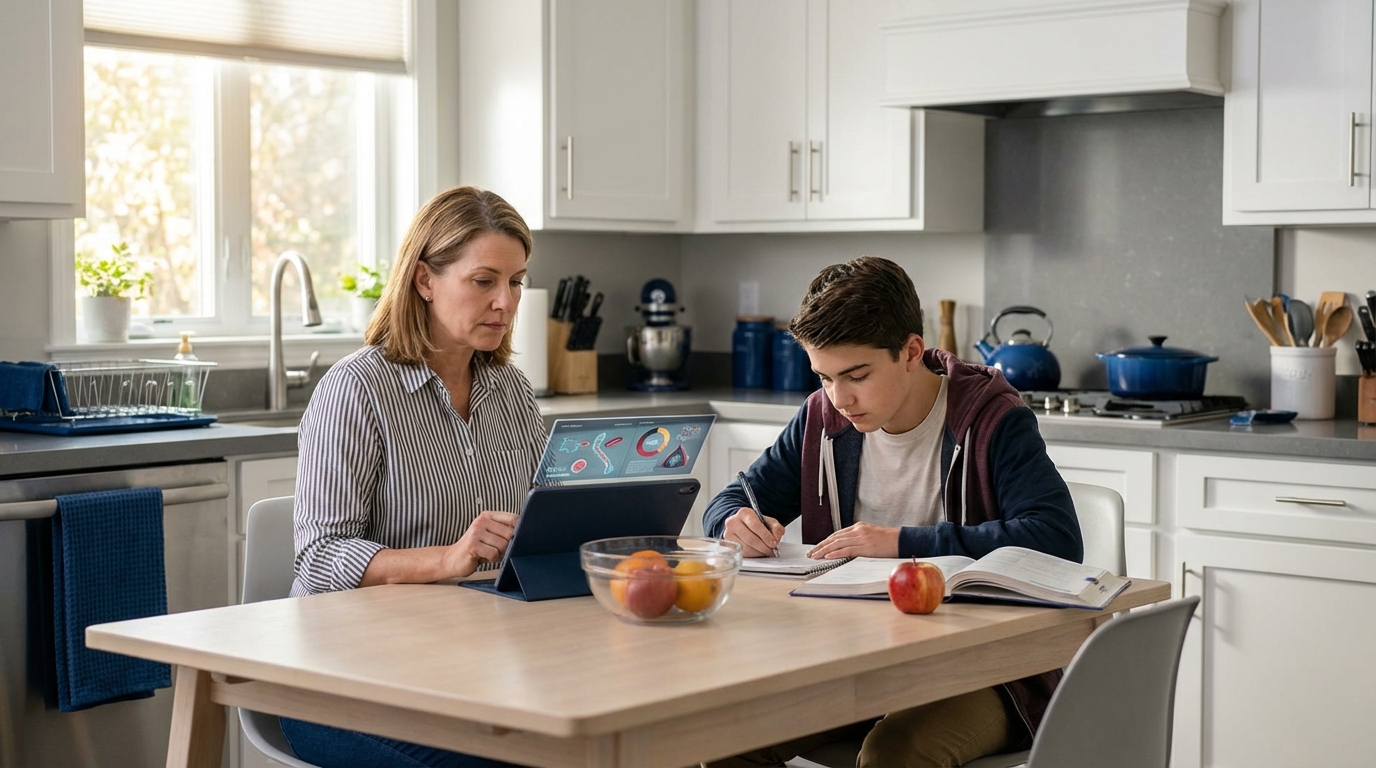
What that means for you, day to day, is that a virtual prescriber can evaluate you, start or continue buprenorphine, and send the prescription to a pharmacy near your home — without you ever sitting in a clinic waiting room. Visits happen from your kitchen table on a lunch break, between school pickup and dinner, or after a shift ends.
Telehealth MOUD is not the right answer for everyone. If you are early in treatment, in active crisis, or your dose has been unstable, in-person OTP care is often still the right call. But for someone who is stable, working, and tired of building a week around a dosing window, the virtual path is now a codified option, not a workaround you have to argue for.
If you live in Vermont — or you are watching Vermont from across the river in New Hampshire, or from Massachusetts or Connecticut wondering whether the same thing is possible where you are — the hub-and-spoke story is worth knowing. Not because it is a slogan, but because it is the closest thing this region has to a real-world stress test of whether office-based care can actually carry the load.
The model works like this. Hubs are the specialty programs, including OTPs, that handle complex induction and patients who need more intensive support. Spokes are office-based settings — primary care offices, addiction medicine practices, community health centers — where stable patients receive ongoing buprenorphine care closer to home. The hub stabilizes. The spoke maintains. The patient is not stuck driving past three exits to reach a single building every morning.
Here is the number that matters. Before the hub-and-spoke build-out, Vermont had roughly 650 patients receiving methadone in OTPs and about 1,700 receiving buprenorphine — around 2,350 people on MOUD statewide. By September 2015, after the spoke network was operating, that figure had grown to over 2,800 patients receiving treatment. More patients, served largely through office-based settings, in a small rural state.2
What that tells you, sitting where you are now, is that spoke-level care is not a workaround for people who could not get into the "real" clinic. It is the main door for a meaningful share of patients in the region. If you are weighing whether to ask about an office-based or virtual path, you are not asking for something rare. You are asking for the structure a lot of people in your same shoes are already using.

Sometimes the right answer is not a different medication. It is the same medication with more breathing room. If methadone has been working — your dose is steady, your cravings are quiet, your life looks more like a life — you do not have to switch just because the daily drive is wearing you down. There is a path inside the OTP that gets the commute off your back without changing what is in your body.
SAMHSA's updated take-home flexibility guidance revised the standards for OTPs providing methadone for unsupervised use, expanding what programs can offer to patients who are clinically stable. In plain terms: more days of medication you carry home, fewer mornings you have to be in the building. The 2024 update to 42 CFR Part 8 reinforced this direction by giving practitioners more autonomy to make patient-centered decisions about take-home schedules and care plans. Your prescriber has more room to say yes than they did a few years ago.15
What that looks like in real life depends on your program and your stability — time in treatment, recent toxicology, the safety of how you store medication at home, and whether you are showing up reliably for the visits and counseling that remain. None of that is a trick question. If you have been steady, ask directly: what would it take to move from daily dosing to a longer take-home schedule, and what is the next milestone on that path?
This option keeps you on the medication that has been protective and trades clinic hours for kitchen-table mornings. For a lot of long-term patients, that trade is the whole point.
The alternatives only matter if you can match them to the specific thing wearing you down. So get specific about your constraint first, then pick the structure.2,5
Bring the conversation in clearly. Your provider is not a gatekeeper to outsmart — they are someone who needs the same information you have been carrying around in your head.
Start by naming the constraint, not the medication. "My shift starts at 6 a.m. and the dosing window is killing me" lands differently than "I want off methadone." One is a logistics problem with several clinical answers. The other sounds like you are leaving treatment, which is not what you mean.
Then ask three direct questions:
Write down the answers. Ask what milestones — time in treatment, recent labs, attendance, counseling engagement — would move you from one structure to the next. The 2024 rule changes gave practitioners more autonomy to make these patient-centered decisions, so the answer you get now may be different from the answer you would have gotten three years ago.7
If the conversation closes a door, ask what would open it. You are not asking for a favor. You are asking for the care plan to match the life you are actually living.
If you or a loved one are ready to create a life you love—without having to sacrifice your work, family, and responsibilities—we're here to support you on that journey. Contact us today for personalized care from the comfort of your own home. We will work with your insurance provider so you can focus on what really matters: recovery.
Yes, transitioning between medications is a clinical adjustment, not a restart. Both are FDA-approved for opioid use disorder, and your time in recovery counts. The transition itself takes planning because you need a window of opioid withdrawal before your first buprenorphine dose to avoid precipitated withdrawal. A prescriber who handles both medications can map the bridge based on your current dose and stability.3,8
It is legal and codified through 2026. The DEA and HHS extended telemedicine flexibilities for prescribing controlled substances, including buprenorphine, through 2026 in their fourth temporary extension. Separately, the 2024 HHS final rule on opioid treatment programs permanently allows telehealth initiation of buprenorphine via audio or video, and methadone initiation via audio-visual telehealth at OTPs. Virtual MAT is a real, ongoing pathway.5,16
An OTP is the federally regulated opioid treatment program where methadone is dispensed on-site. An OBOT provider is an office-based clinician who prescribes buprenorphine you fill at a community pharmacy. Massachusetts lists both as distinct service categories, and Vermont has formal rules governing office-based buprenorphine prescribing. The practical difference is daily dosing inside a building versus a prescription you manage at home.4,6,11
Often, yes. SAMHSA's revised guidance expanded what programs can offer for unsupervised methadone use when you are clinically stable, and the 2024 update to 42 CFR Part 8 gave practitioners more autonomy to make patient-centered take-home decisions. Ask your prescriber directly what milestones — time in treatment, recent labs, attendance — would move you to a longer take-home schedule. The conversation is worth having.15,16
Naltrexone is a non-agonist that blocks opioid receptors, given as a once-monthly injection through a regular medical practice. It tends to fit people who are already past an opioid-free window — often post-detox, post-incarceration, or stepping down from a low buprenorphine dose. It is harder for someone currently on a meaningful methadone dose because you cannot start it until opioids have cleared. Plan the bridge with a prescriber.8,12
Lead with the constraint, not the medication. Saying "my shift starts at 6 a.m. and the dosing window is breaking my week" frames it as logistics, not as leaving treatment. Ask three questions: what would qualify me for more take-homes , am I a candidate for office-based buprenorphine, and is telehealth follow-up an option? The 2024 rule changes gave your provider more room to say yes.1,4,5
November 6, 2025
February 5, 2026

November 6, 2025